Working with Details Flat Icon: Hand Drawn Precision for Modern Design
In the rapidly evolving landscape of digital interface design, the tension between sleek minimalism and human warmth is more pronounced than ever. Users are increasingly fatigued by sterile, corporate aesthetics that feel mass-produced and impersonal. This shift in user expectation has brought a renewed focus on assets that convey authenticity and craftsmanship. At the center of this movement is the concept of Working with Details Flat Icon. Hand Drawing techniques applied to vector graphics. This approach bridges the gap between the scalability required for modern web and app development and the organic texture that resonates with human emotion.
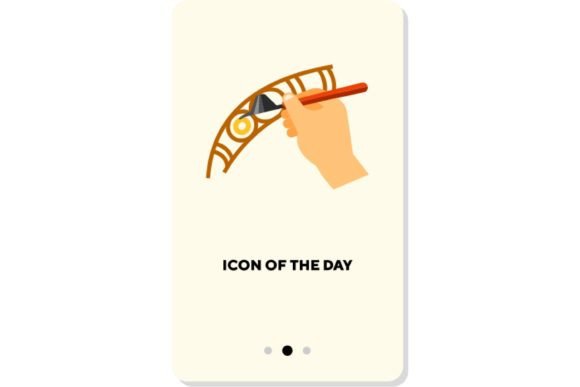
The specific visual motif of a hand drawing a pattern with a brush, isolated as a vector sign, serves as more than just a decorative element. It represents a broader hobby and craftwork concept that is permeating professional design workflows. When designers integrate these vector illustration symbol elements for web design and apps, they are not merely adding imagery; they are signaling attention to detail, creativity, and a departure from rigid automation. Understanding how to effectively utilize these assets requires a nuanced appreciation of both technical constraints and artistic intent.
The Resurgence of the Human Touch in Digital Interfaces
For over a decade, flat design dominated the digital space, prioritizing clarity and speed over personality. While effective for usability, this trend often resulted in a homogenized look across platforms. Today, we are witnessing a correction. The modern user craves connection. They want to feel that there is a human behind the screen. This is where the Working with details flat icon. Hand draws a pattern with brush isolated vector sign becomes a powerful tool. It visually communicates effort and care.
This trend aligns with the broader "maker movement" and the rise of DIY culture. As more individuals engage in hobbies such as pottery, knitting, or digital illustration, their aesthetic preferences shift toward materials and styles that reflect these activities. Businesses and creators who adopt this visual language tap into a shared cultural value system. It suggests that the product or service offered is crafted with intention, much like a handmade item. This psychological association can significantly enhance brand trust and user engagement.
Why Vector Illustrations Remain Essential
While the aesthetic may be organic, the delivery mechanism must remain technically robust. This is why the vector format is non-negotiable for professional web and app design. Unlike raster images, which pixelate when scaled, vector illustration symbol elements maintain crisp edges at any size. This ensures that the intricate details of a hand-drawn brush stroke remain sharp on a high-resolution smartphone screen as well as on a large desktop monitor.
Furthermore, vectors are lightweight. In an era where page load speed is a critical ranking factor for search engines and a key determinant for user retention, using optimized SVG (Scalable Vector Graphics) files allows designers to include rich, detailed imagery without compromising performance. The isolation of the element—such as the hand and brush being separated from the background—provides maximum flexibility. Designers can place these icons over various colors, gradients, or textures without worrying about awkward white boxes or jagged edges.
Practical Applications for Creators and Businesses
Integrating these detailed flat icons into a project requires strategic thinking. It is not enough to simply drop a clip-art style image onto a page. The context must support the narrative. Here are several practical ways professionals can leverage this asset type:
- Onboarding Flows: Use the hand-drawing motif to guide users through setup processes. It subtly suggests that the user is "crafting" their own experience, making the technical steps feel more creative and less administrative.
- Service Pages for Creatives: For freelancers, agencies, or educators offering courses in arts and crafts, these icons serve as immediate visual shorthand. They reinforce the core competency of the provider without needing excessive text.
- Loading States and Micro-interactions: Animated versions of a hand drawing a pattern can provide delightful feedback during wait times. This transforms a moment of potential frustration into an engaging brand interaction.
- E-commerce Product Categories: Online stores selling hobby supplies can use these icons to categorize items. A brush icon for painting supplies or a needle for sewing kits creates an intuitive navigation structure that feels warm and inviting.
For entrepreneurs and marketers, the key is consistency. If you choose a hand-drawn aesthetic for your icons, ensure that your typography and color palette complement this style. A harsh, geometric font might clash with the soft curves of a brush stroke. Instead, opt for typefaces that have some organic variation or humanist qualities to maintain visual harmony.
Evolution of Design Workflows and Tooling
The availability of high-quality Working with Details Flat Icon. Hand Drawing assets has changed how design teams operate. In the past, creating custom illustrations for every project was time-prohibitive. Today, libraries of isolated vector signs allow for rapid prototyping and deployment. However, this accessibility brings its own challenge: differentiation.
To stand out, professionals must customize these base elements. This might involve adjusting the color palette to match brand guidelines, combining multiple elements to create unique compositions, or adding subtle textures that mimic real paper or canvas. The goal is to use the vector asset as a foundation, not a final solution. This hybrid approach—leveraging pre-made efficiency while adding custom touches—represents the modern workflow. It balances the need for speed with the demand for uniqueness.
Moreover, the rise of no-code and low-code platforms has democratized design. Business owners and bloggers who are not trained graphic designers can now access and implement these vector elements. This shifts the skill requirement from technical drawing ability to curatorial taste. Understanding which icon conveys the right message and how to place it effectively becomes the primary value add.
Navigating the Balance Between Detail and Clarity
One common pitfall when working with detailed flat icons is over-complication. The term "flat" implies a lack of depth, shadows, and gradients. When adding hand-drawn details, there is a risk of cluttering the icon, making it difficult to recognize at small sizes. The Working with details flat icon. Hand draws a pattern with brush isolated vector sign must remain legible even when reduced to the size of a favicon or a mobile menu button.
Designers should adhere to the principle of reduction. Start with the essential shape—the hand, the brush, the stroke—and only add details that enhance recognition or character. Test the icon at various scales early in the design process. If the details blur together or disappear, simplify the lines. The beauty of vector formats is that editing paths is non-destructive and easy, allowing for iterative refinement until the balance is perfect.
Future-Proofing Your Visual Strategy
As technology advances, the way we interact with these icons will evolve. Voice interfaces, augmented reality, and haptic feedback are changing the definition of user experience. However, the fundamental need for clear, emotionally resonant visual communication remains. The hobby and craftwork concept embodied by these icons taps into a timeless human desire for creation and tangibility.
For educators and content creators, these visuals can help demystify complex topics. Using a hand-drawn style to illustrate a step-by-step guide makes the information feel more approachable and less intimidating. It lowers the cognitive load for the learner, suggesting that mastery is a process of gradual addition, much like drawing a pattern stroke by stroke.
In conclusion, the integration of Working with Details Flat Icon. Hand Drawing elements into web and app design is not merely a passing trend. It is a response to a deeper market shift toward authenticity and human-centric design. By understanding the technical advantages of vector formats and the psychological impact of hand-crafted aesthetics, professionals can create digital experiences that are both efficient and emotionally engaging. Whether you are a seasoned designer or a business owner looking to refresh your brand, embracing these detailed, isolated vector signs offers a pathway to connecting more meaningfully with your audience.
The key lies in thoughtful application. Use these elements to tell a story, to guide a user, or to soften a technical interface. Let the hand-drawn quality remind your users that behind every pixel, there is a human intention. In a digital world that often feels automated, that reminder is invaluable.