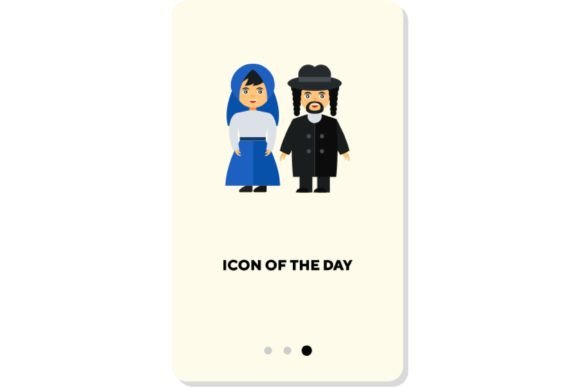
Understanding the Ethnic Traditional Costumes Flat Icon: A Guide for Designers and Developers
In the rapidly evolving landscape of digital design, visual shorthand has become essential for effective communication. Among the myriad of graphic assets available to creators, the Ethnic Traditional Costumes Flat Icon stands out as a specific yet versatile resource. This vector illustration symbol is not merely a decorative element; it serves as a critical bridge between cultural representation and modern user interface (UI) functionality. For professionals working on web design, mobile applications, or educational platforms, understanding the nuances of this asset—specifically variants like the "J" series or Jewish isolated vector signs—is crucial for making informed design decisions.
The concept behind these icons revolves around simplifying complex cultural attire into clean, recognizable shapes. Unlike photorealistic images, flat icons strip away unnecessary detail, focusing on silhouette, color blocks, and key identifying features. This approach ensures that the icon remains legible at small sizes while conveying the intended message of tradition, heritage, or specific ethnic identity. When evaluating whether to incorporate an Ethnic Traditional Costumes Flat Icon into your project, it is important to look beyond aesthetics and consider usability, cultural sensitivity, and technical compatibility.
Distinctive Features of Vector-Based Cultural Symbols
What makes the Ethnic Traditional Costumes Flat Icon distinct from other graphic resources is its dual focus on clarity and cultural specificity. These vectors are typically designed with a minimalistic philosophy, using solid colors and simple geometric forms. For instance, a Jewish isolated vector sign might highlight specific garments such as a tallit or kippah without rendering every thread or texture. This abstraction allows the icon to function effectively across various digital contexts, from navigation menus in travel apps to category markers in educational software.
The "J" designation often refers to a specific set or style within a larger icon library, indicating a particular aesthetic consistency. Designers value these standardized sets because they ensure visual harmony throughout an application. If you are building a platform that highlights global traditions, using a cohesive set of flat icons ensures that the representation of Jewish traditions aligns visually with representations of other cultures, avoiding a disjointed or amateurish appearance. The vector format further enhances this utility by allowing infinite scalability without loss of quality, a non-negotiable requirement for responsive web design.
Comparing Flat Icons with Alternative Visual Formats
When choosing visual assets, designers often weigh flat icons against other formats such as line icons, 3D renders, or photographic imagery. Each option carries distinct tradeoffs regarding load times, interpretability, and emotional impact.
- Flat Icons vs. Line Icons: Flat icons, including the Ethnic Traditional Costumes Flat Icon, generally offer better visibility on busy backgrounds due to their solid fills. Line icons can sometimes disappear against complex UI elements or suffer from visibility issues on low-resolution screens. However, line icons may feel lighter and more modern in minimalist interfaces. The choice depends on the overall weight of your design system.
- Flat Icons vs. Photorealism: Photographs provide rich detail and emotional depth but come with significant baggage. They require careful cropping, consistent lighting, and diverse representation to avoid stereotypes. Flat icons abstract these details, reducing the risk of misrepresentation while ensuring faster load times. For a "Clothes and tradition concept," a flat icon offers a symbolic representation that is quicker to process cognitively than a detailed photograph.
- Vector vs. Raster Images: The vector nature of these icons is a decisive advantage. Raster images (like PNGs or JPEGs) pixelate when scaled, requiring multiple file versions for different screen densities. Vector symbols for web design and apps remain crisp on any device, from a smartwatch to a 4K monitor, simplifying the development workflow.
While 3D icons are gaining popularity for their tactile feel, they often demand more processing power and can clutter simple interfaces. The Ethnic Traditional Costumes Flat Icon strikes a balance, offering enough detail to be recognizable without overwhelming the user interface.
Evaluating Cultural Sensitivity and Representation
One of the most critical aspects of using cultural symbols in design is ensuring respectful and accurate representation. An Ethnic Traditional Costumes Flat Icon must navigate the fine line between simplification and stereotyping. When selecting a Jewish isolated vector sign or any other cultural marker, designers should evaluate the source and the design choices carefully.
Best practices involve consulting with cultural experts or using resources created by designers from within those communities. The icon should highlight recognizable and respected elements of traditional dress without reducing a culture to a caricature. For example, ensuring that religious garments are depicted correctly according to tradition is vital. The flat design style helps here by focusing on the form rather than potentially sensitive textural or contextual details, but the underlying shape must still be accurate.
Furthermore, context matters. Using these icons in a travel app to denote cultural sites is generally appropriate. However, using them in a gaming context or for unrelated commercial products may be perceived as trivializing. Always consider the user’s perspective and the intent behind the inclusion of the symbol. The goal is to honor the tradition, not just to decorate the interface.
Practical Use Cases and Implementation Strategies
Identifying the right scenario for deploying an Ethnic Traditional Costumes Flat Icon can enhance user experience significantly. Here are several practical applications where these assets excel:
- Educational Platforms: In e-learning modules about world history or sociology, these icons can serve as chapter markers or interactive elements. They help students quickly identify sections related to specific cultures or time periods.
- Travel and Tourism Apps: Users often search for cultural experiences. Flat icons can categorize attractions, such as museums, heritage sites, or traditional festivals, making navigation intuitive and visually engaging.
- E-Commerce Fashion Stores: For retailers specializing in traditional or ethnic wear, these icons can filter product categories. A user looking for traditional Jewish attire can click on the relevant icon to narrow down search results efficiently.
- Event Management Software: When organizing multicultural festivals or international conferences, these symbols can help attendees locate specific cultural pavilions or workshops on digital maps.
Implementation should prioritize accessibility. Ensure that each icon is accompanied by appropriate alt text for screen readers. For instance, instead of just labeling an image as "icon," describe it as "Icon representing traditional Jewish clothing." This practice ensures that users with visual impairments receive the same informational value as sighted users.
Decision Factors: When to Choose This Asset
Deciding whether the Ethnic Traditional Costumes Flat Icon is the right choice for your project involves assessing several key factors. If your primary goal is quick recognition and seamless integration into a modern, clean UI, this format is ideal. It is particularly suitable for projects where bandwidth efficiency and scalability are priorities.
However, if your project requires deep emotional engagement or highly detailed historical accuracy, you might need to supplement these icons with richer media, such as illustrations or photographs. Flat icons are symbols, not comprehensive representations. They work best as signposts rather than destinations.
Additionally, consider the scope of your project. If you are designing a global platform, ensure you have access to a comprehensive library that covers all relevant cultures consistently. Using a single Ethnic Traditional Costumes Flat Icon without matching icons for other groups can create visual imbalance and imply bias. Look for complete sets that offer a uniform style across different ethnic representations.
Ultimately, the value of these vector illustration symbol elements lies in their ability to communicate complex cultural ideas quickly and respectfully. By choosing high-quality, well-designed assets and implementing them with care, designers can create inclusive and user-friendly digital experiences that celebrate diversity without compromising on performance or aesthetics.